Every fire feature we carry runs on gas, and the fuel is chosen when you order. Here is how natural gas and propane compare at the site, and what each one needs.
The short answer
Choose natural gas when a gas line already reaches the patio or can be run to it: it comes from your meter and never runs out. Choose propane when there is no gas line or the feature needs to stay movable: it runs from a tank you refill or swap. Most of the fire features we carry come in both versions, as separate part numbers, so decide before you order.
How do natural gas and propane compare?
| Natural gas | Propane | |
|---|---|---|
| Where it comes from | The utility line and your meter | A tank you refill or swap |
| Runs out? | No | Yes, when the tank is empty |
| Install | A gas line run to the feature by a licensed technician | A tank and hose, or a fixed tank with a line |
| Best for | Permanent features close to an existing line | Sites without gas, or features that may move |
| Heat content | About 1,036 BTU per cubic foot | About 91,452 BTU per gallon |
The burner rating is the same on either fuel. A 65,000 BTU/hr fire table puts out 65,000 BTU/hr on natural gas or on propane, each through its own orifice.
Back to topWhere does the propane tank go?

Three options, depending on the model:
| Option | How it works | Examples |
|---|---|---|
| Inside the table | A door or tray in the base holds the tank | Prism Porto 58 and 68, 15 lb tank; Porto 60, 10 lb tank; Pentola 3 pedestal, 20 lb tank |
| Tank enclosure | A matching concrete cover hides a 20 lb tank and doubles as an end table | Prism Orinda and other Prism enclosures, sold with a fire feature |
| Remote tank | A larger tank set away from the seating area with a hose or a fixed line | Any feature, installed by your gas supplier |
Prism Hardscapes publishes about 8 to 10 hours per 20 lb tank for its 65,000 BTU/hr fire tables. Our BTU guide shows how to estimate run time for larger burners.
Back to topFire tables with a hidden tank
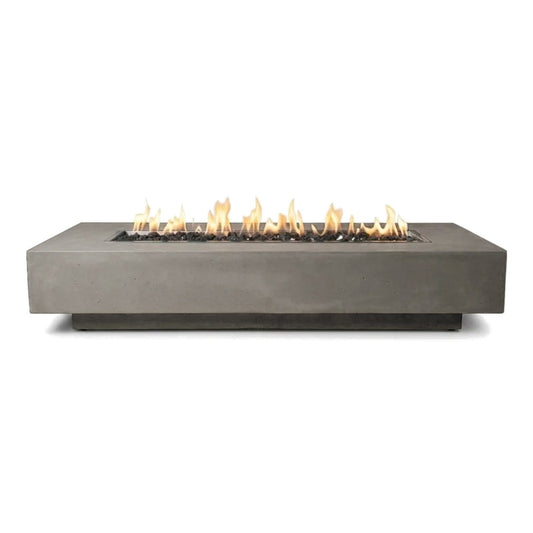
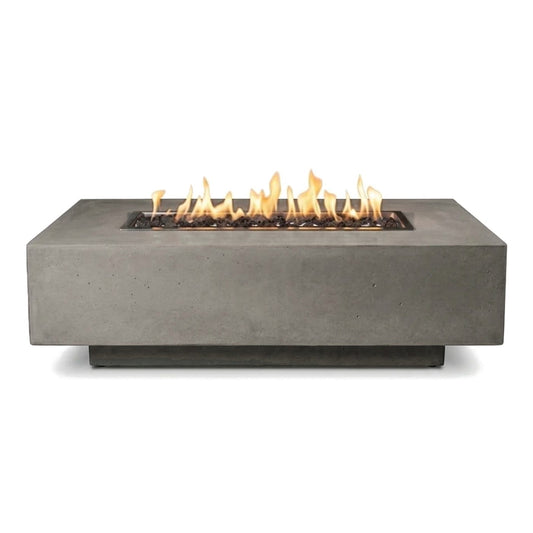
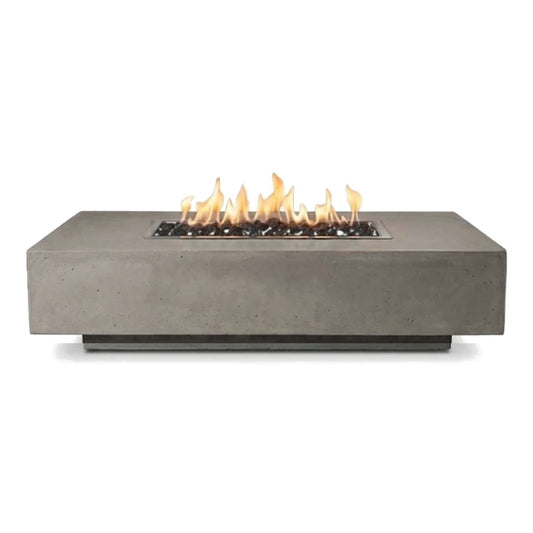
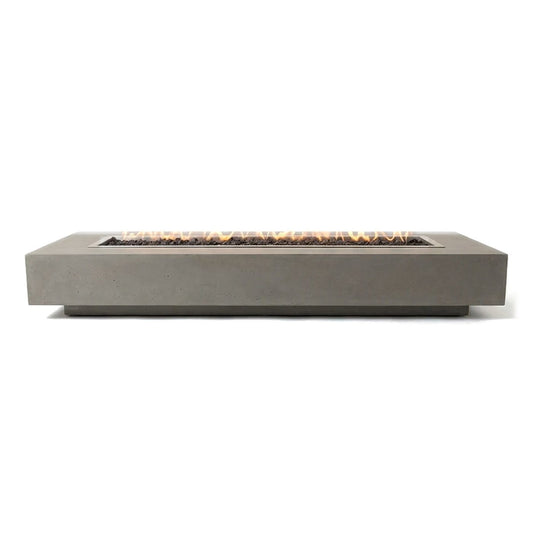
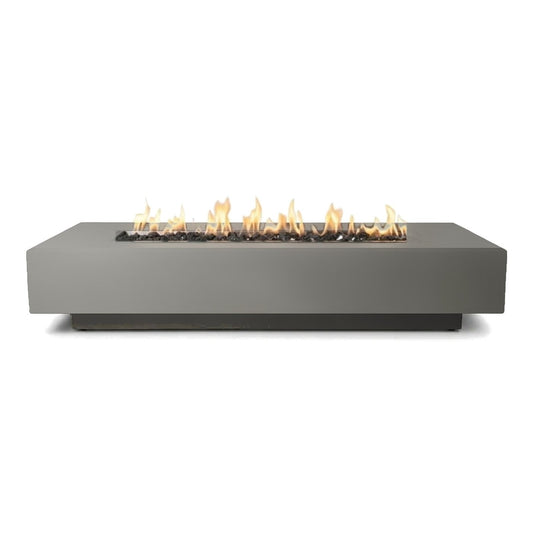
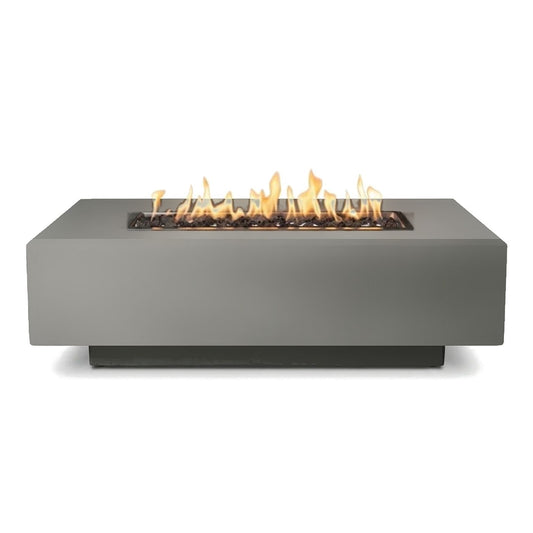
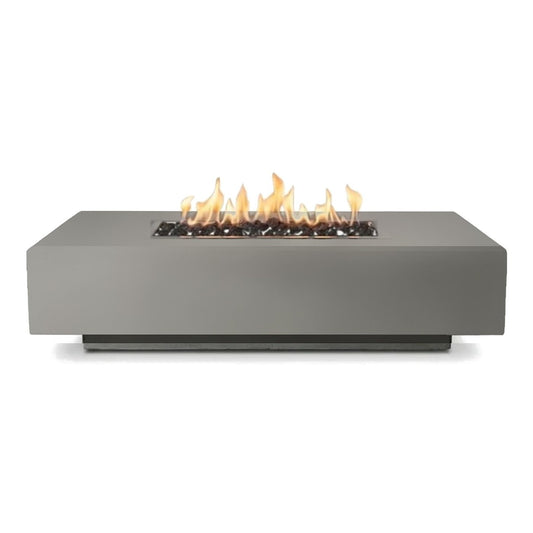
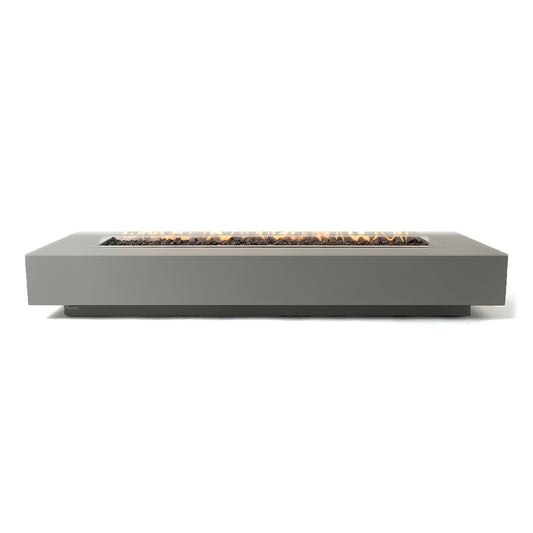
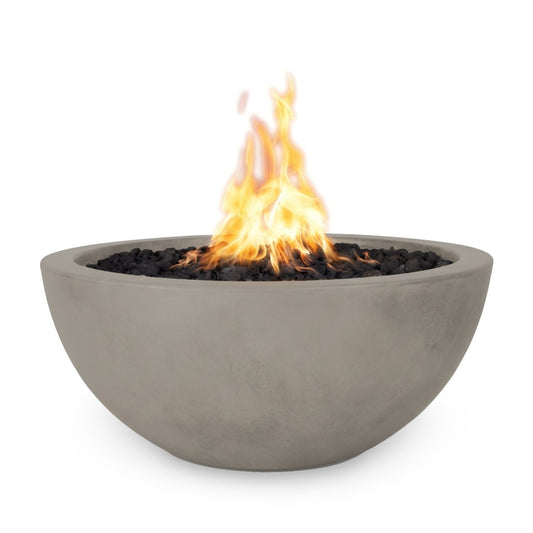
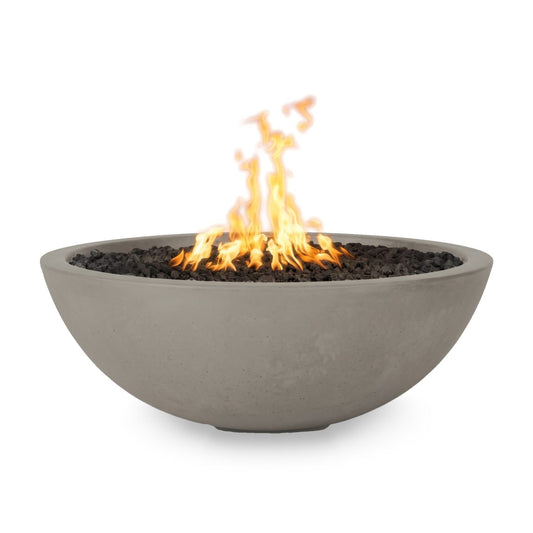
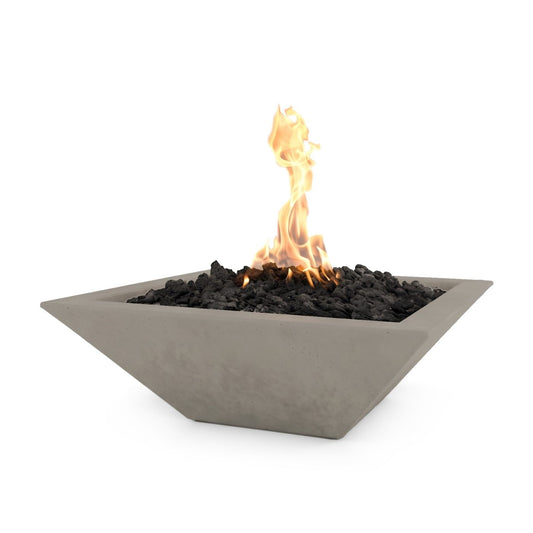
Prism Hardscapes models that keep the propane tank out of sight.


Can I switch from propane to natural gas later?
Plan on no. CROSSFIRE burners and most concrete fire features are built with a fuel-specific orifice, and the fuel is chosen when you order. Prism Hardscapes sells a conversion kit for its own features and asks owners to contact its technical support before any orifice change. Confirm the fuel at the site before the order goes in.
If a natural gas line may be added later, ask us before you order. It is usually simpler to order the version for the fuel you will have at install.
Does the enclosure need vents?
Yes. Warming Trends requires at least 18 square inches of venting on each of two opposite sides of the enclosure, 36 square inches in total, for natural gas and propane alike. Propane is heavier than air, so Fire by Design asks for propane vents at the very bottom of the feature and none in the burner pan.
Back to topWho connects the gas?
A licensed gas technician, on either fuel. The line has to be sized for the full load and the length of the run, and installed to the National Fuel Gas Code, ANSI Z223.1 and NFPA 54. Many cities also require a permit for a new gas line, so ask your installer to pull it.
| Fuel | Supply pressure listed in the match-lit manuals |
|---|---|
| Natural gas | 3.5 to 7.0 inches water column |
| Propane | 8.0 to 11.0 inches water column |
Questions we get
Is natural gas or propane cheaper to run?
It depends on local prices for each fuel. Compare your utility's natural gas rate with your propane supplier's price per gallon, using about 1,036 BTU per cubic foot for natural gas and about 91,452 BTU per gallon for propane.
How long does a 20 lb propane tank last?
Prism Hardscapes publishes about 8 to 10 hours for its 65,000 BTU/hr fire tables. Larger burners empty a tank faster.
Can I convert a fire table to natural gas later?
Plan on no. The fuel is set by the orifice and chosen when you order. Prism sells a conversion kit for its own features, so ask us before you buy if the fuel may change.
Does a fire pit need vents for propane?
Yes. Propane is heavier than air, so the enclosure needs vents low on the sides. Warming Trends requires at least 18 square inches on each of two opposite sides.
Do I need a permit for a gas fire pit?
Often, for a new gas line. A licensed gas technician installs it to the National Fuel Gas Code, and many cities require a permit for the line.
Talk to a fire specialist
Not sure which fuel fits your site?
Tell us whether there is a gas line near the patio and how far it runs, and we will help you choose the fuel, the tank setup and the parts to order.


Sources: Prism Hardscapes, Warming Trends and Fire by Design listings and manuals at American Fire Features, read November 2026. Natural gas and propane heat content from the U.S. Energy Information Administration. The product page and the installation manual govern if anything here differs.